Drip Review 2025: Is This Ecommerce Email Tool Worth It?
Drip has staked out an interesting spot in email marketing — it’s the platform that actually gets e-commerce. While other tools try to be everything to everyone, Drip doubled down on online stores. The question is whether that focus makes it brilliant or limiting. After digging into the platform and talking to users, here’s what you need to know.
What is Drip?
Drip is email marketing software built specifically for ecommerce businesses. Rob Walling founded it in 2012, and Leadpages bought it in 2016, which gave it more resources to focus on what it does best: helping online stores create personal connections with customers.
Here’s what makes it different: most email platforms treat ecommerce like an afterthought. They’ll add some basic product blocks and call it a day. Drip was designed from the ground up for online retailers. It tracks what people buy, what they browse, and how they behave on your site.
The platform calls itself “customer-first,” which sounds like marketing speak until you see how it works. Instead of sending the same email to everyone, Drip helps you create different paths for different customers. Someone who just made their first purchase gets one series of emails. Your VIP customers who’ve bought five times? They get something completely different.
Drip Key Features
Drip’s campaigns go way beyond “send this email to this list.” Everything revolves around what customers actually do. Browse a product category but don’t buy? There’s an email for that. Make your first purchase? Different email sequence. Become a repeat customer? You get the VIP treatment.
The visual workflow builder makes this complexity manageable. You can set up branching paths where customers automatically move to different email sequences based on their actions. It’s like having a personal assistant who remembers every customer interaction and responds accordingly.
Revenue tracking is built into everything. You’re not just looking at open rates — you can see exactly which email sequences generate the most money. When your boss asks about email marketing ROI, you have real numbers to show.
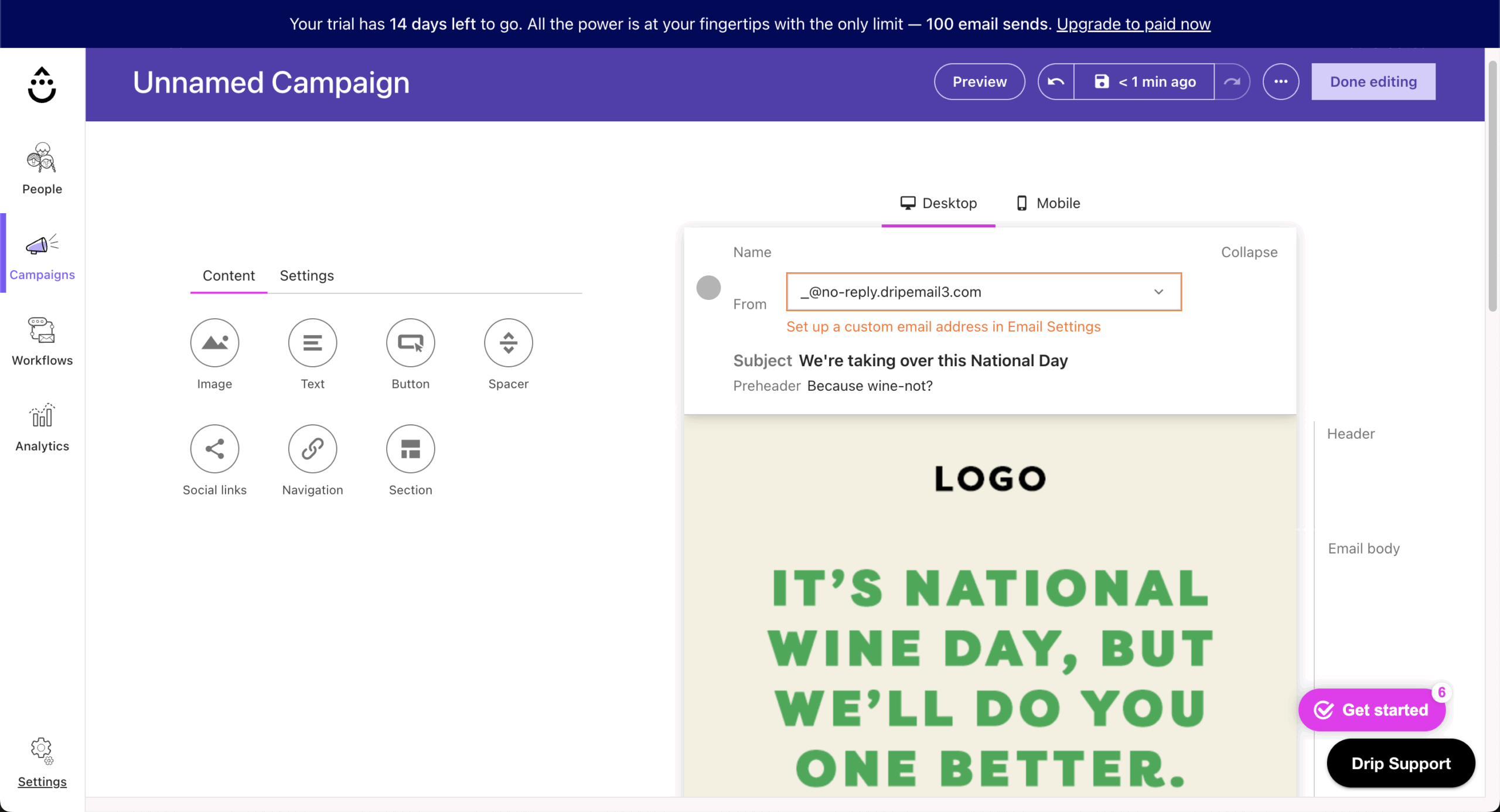
The template library is smaller than platforms like Mailchimp, but that’s kind of the point. Every template is designed for ecommerce scenarios — welcome series, cart abandonment, post-purchase follow-ups, win-back campaigns. Quality over quantity.
The drag-and-drop builder works well enough, though it’s not going to win any design awards. You can add product recommendations, customer-specific content, and all the dynamic elements you’d expect. It connects to your store catalog, so showcasing products in emails is straightforward.
If you’re looking for general newsletter templates or content marketing designs, you’ll probably feel limited. This is very much an ecommerce-focused tool.
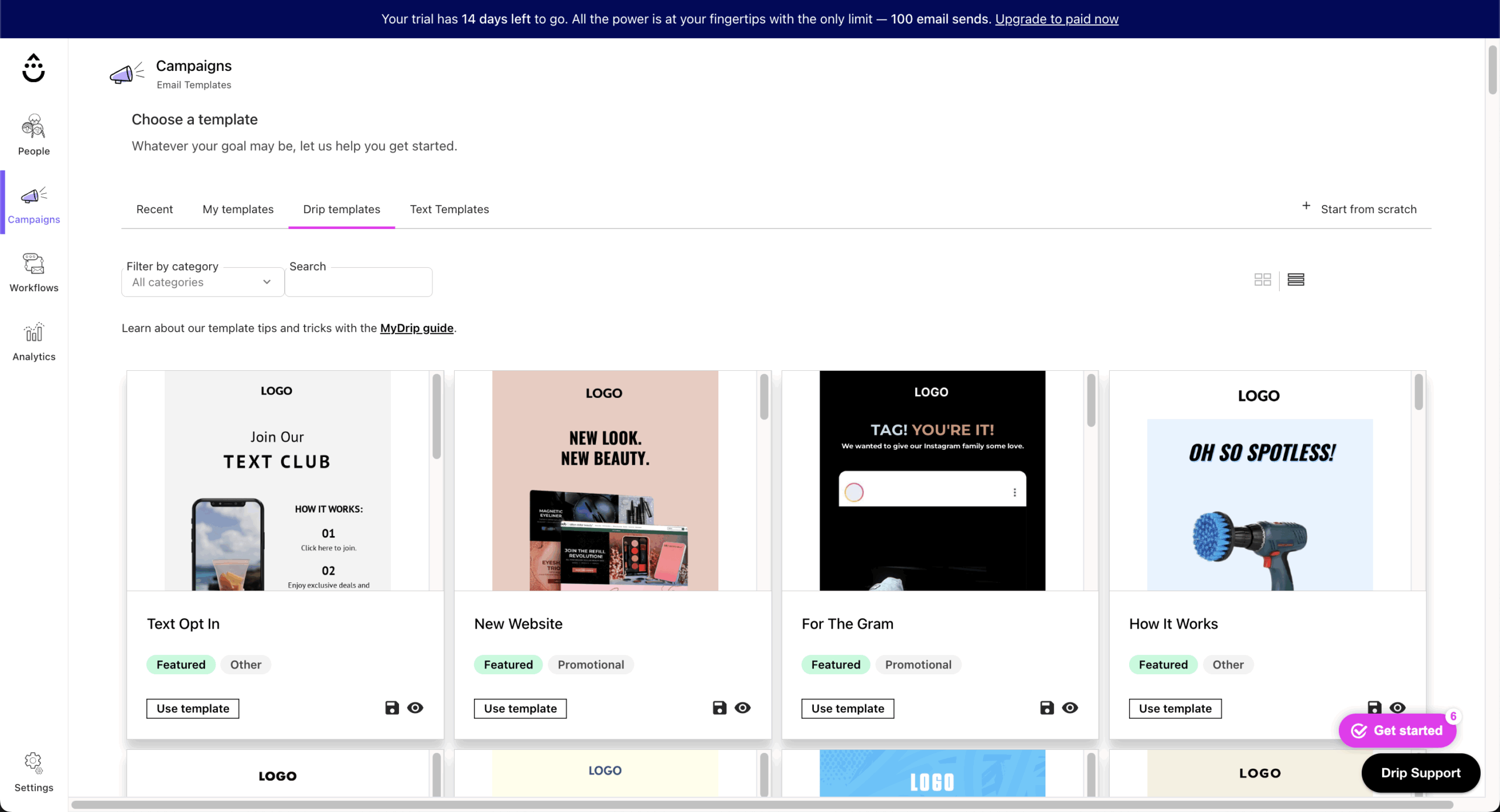
This is where Drip really shines. The automation goes deep — we’re talking conditional logic, behavioral triggers, and customer journey mapping that would make enterprise platforms jealous. Yet somehow it doesn’t feel overwhelming to set up.
Pre-built templates cover the basics like welcome series and abandoned cart recovery. But you can customize everything based on your specific business. Different follow-ups for premium vs. budget customers? Easy. Seasonal promotions for repeat buyers? No problem.
The platform handles complex scenarios gracefully. You can create automation that waits for specific customer actions, sends different emails based on purchase history, or even pauses sequences during busy periods. It’s sophisticated without being complicated.
Contact management here isn’t just about email addresses. Drip builds detailed customer profiles that include purchase history, website behavior, and engagement patterns. This data becomes the foundation for everything else the platform does.
Dynamic segmentation updates in real-time as customers take actions. Create a segment for “customers who spent over $500 in the last 90 days” and watch it populate automatically. The segmentation options are extensive without being overwhelming.
Bulk operations make managing large lists manageable. You can apply tags, update custom fields, or add people to workflows across thousands of contacts at once. The platform also handles list hygiene automatically, though deliverability has occasionally been a concern for some users.
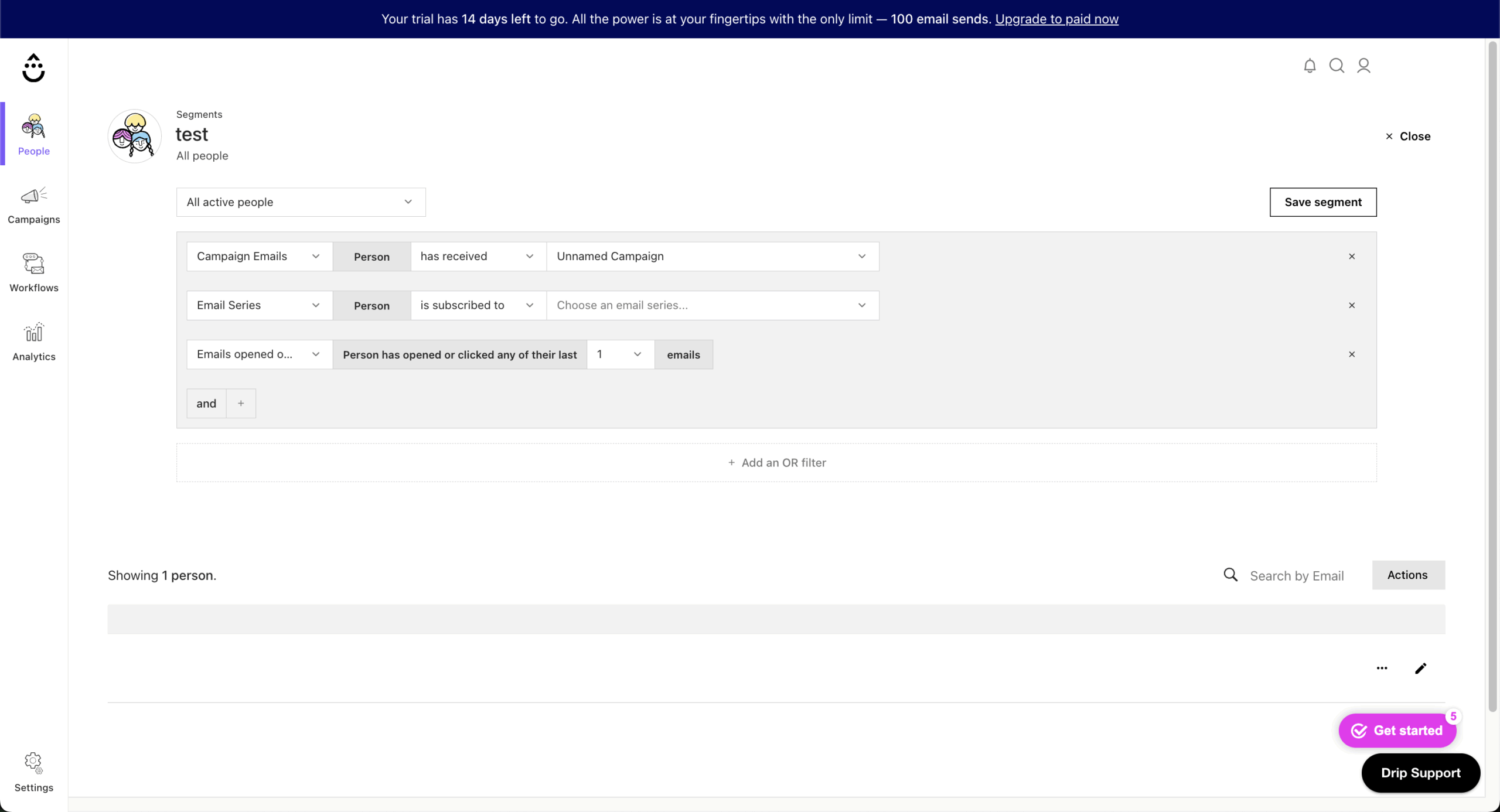
Here’s where Drip shows its limitations. There’s no built-in landing page builder, which feels like an oversight for a platform this focused on conversion optimization. You get signup forms and popups that work fine for basic lead capture, but that’s about it.
The form builder offers decent customization and smart display triggers. Exit-intent popups, time-based triggers, page-specific forms — the targeting options are solid. Forms connect directly to your automation workflows, which is convenient.
For actual landing pages, you’ll need to use Leadpages (convenient since they own Drip) or another external tool. This adds complexity and cost to your marketing stack.
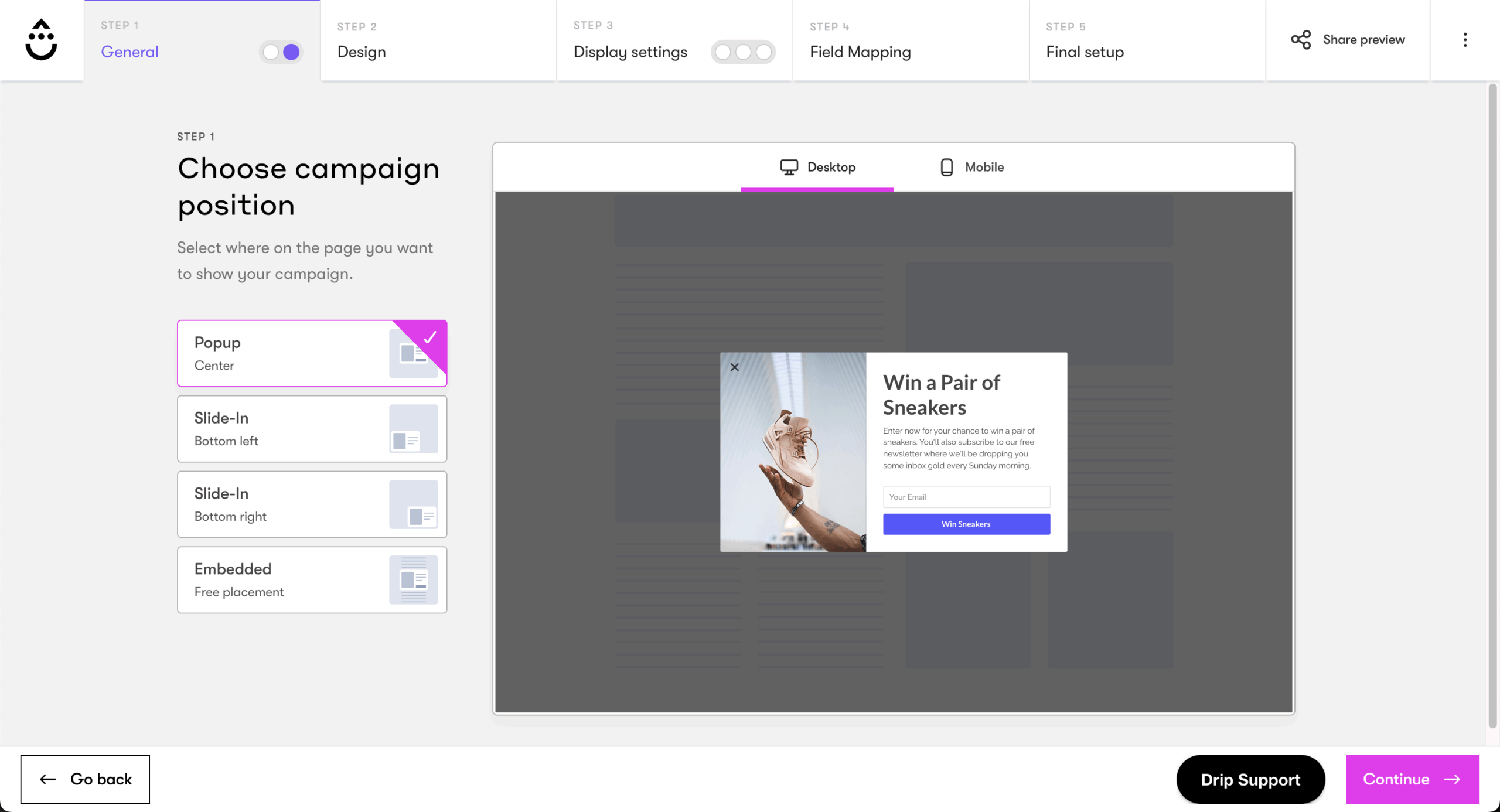
Drip’s analytics focus on money rather than just engagement metrics. You can see exactly how much revenue each campaign generates, which customer segments are most valuable, and how email marketing contributes to your bottom line.
The dashboards show standard metrics like open rates and clicks, but also e-commerce-specific data like revenue per email and average order value. This helps you understand the actual business impact rather than just engagement numbers.
Customer journey analytics let you see where people drop off in your automation sequences. This visibility helps you optimize workflows for better performance, though the reporting interface could be more intuitive.
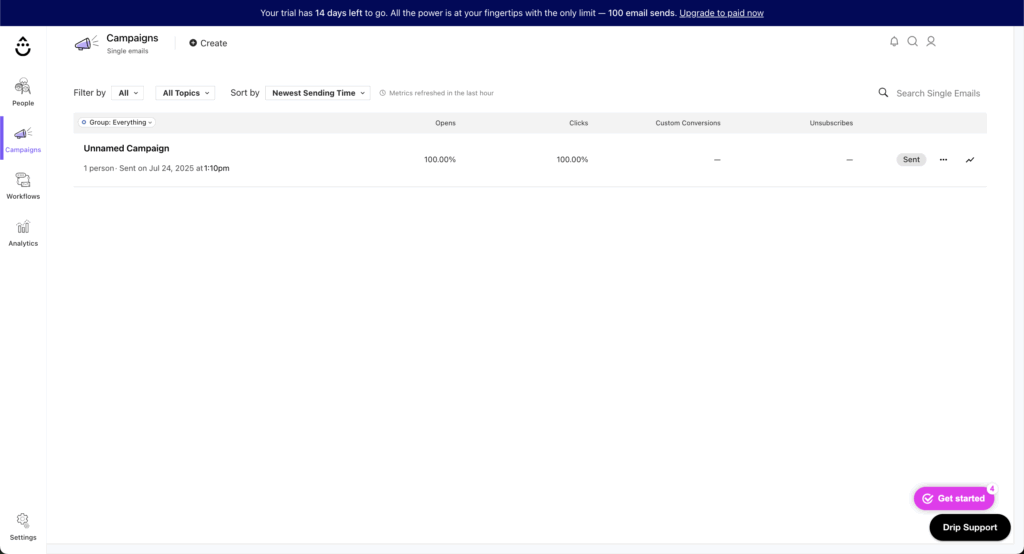
Over 150 integrations connect Drip to most popular e-commerce and business tools. The deep connections with platforms like Shopify, WooCommerce, and BigCommerce automatically pull in order data and customer behavior. This is where the e-commerce focus really pays off.
The REST API allows custom integrations for businesses with specific needs. The documentation is solid, and the API is well-designed for developers who need to connect Drip to custom systems or workflows.
E-commerce-specific integrations set Drip apart from general email platforms. Features like abandoned cart recovery and product recommendations work because the platform understands shopping behavior, not just email engagement.
Email support is available to all customers during business hours (9 AM to 5 PM CT, Monday through Friday). Customers spending $99+ per month also get live chat access during those same hours. No phone support, which some find limiting.
The support team generally knows their stuff when it comes to e-commerce marketing strategies. The help center includes extensive documentation and video tutorials that go beyond basic features to cover strategic advice.
International customers sometimes struggle with the limited support hours, and response times can vary. When you do get help, it’s usually helpful, but getting that help isn’t always fast.
Drip Pricing Plans and Value
Price
Contacts
Monthly Emails
Key Features
Free Trial
$0
Up to 2,000
Unlimited
14-day trial, no credit card required
Starter
$39/month
Up to 2,500
Unlimited
All features, email support, basic automation
Growth
$89/month
Up to 5,000
Unlimited
Advanced automation, live chat support, priority delivery
Pricing scales with your contact count. The jumps can be steep — 10,000 contacts costs around $154/month, while 25,000 contacts runs about $289/month. Unlimited email sending is included, which is generous compared to platforms that cap monthly sends.
The pricing feels high compared to basic email tools, but it’s competitive within the e-commerce automation space. When your emails are generating trackable revenue, the cost often justifies itself. The question is whether you’re at that point yet.
Drip Pros and Cons
- E-commerce-specific features and integrations
- Advanced automation with visual workflow builder
- Revenue tracking and detailed analytics
- Unlimited email sending on all plans
- Excellent deliverability rates
- Higher pricing than basic email tools
- No free plan (only 14-day trial)
- Limited template library
- No built-in landing page builder
- E-commerce focus may not suit all businesses
Pros
The e-commerce specialization is either Drip’s biggest strength or biggest limitation, depending on your business. If you’re running an online store, the deep integrations and behavior-based automation create possibilities that general email tools can’t match.
Revenue attribution sets Drip apart from competitors obsessed with engagement metrics. Seeing exactly how much money each email campaign generates makes optimization straightforward. You’re not guessing which emails work — you’re looking at dollar amounts.
The visual automation builder makes complex workflows accessible without requiring technical expertise. You can create sophisticated customer journeys that would typically need developer resources or expensive enterprise platforms.
Cons
Pricing is the main barrier for many businesses. The monthly cost adds up quickly as your list grows, and there’s no free plan to test the waters long-term. The 14-day trial helps, but it’s often not enough time to see meaningful results.
The template library feels limited if you’re coming from design-focused platforms. While the available templates work well for e-commerce, you’ll feel constrained if you need variety or want to create content beyond product marketing.
The e-commerce focus that makes Drip powerful also makes it irrelevant for many businesses. Service companies, B2B operations, and content creators might find the platform’s assumptions don’t match their needs.

Should You Choose Drip?
Best For
Not Recommended For
E-commerce businesses with 1,000+ customers
Service-based businesses or B2B companies
Brands focused on customer lifetime value
Startups with very limited budgets
Stores needing sophisticated automation
Businesses wanting comprehensive design tools
Companies prioritizing revenue attribution
Organizations needing extensive content marketing features
Who Drip is Perfect For
Established e-commerce businesses with growing customer bases get the most value from Drip’s specialized features. If you’re already generating consistent sales and want to optimize customer relationships, the lifecycle marketing approach makes sense.
Direct-to-consumer brands focused on building loyalty rather than just acquiring customers benefit from the sophisticated segmentation and automation. The platform excels at turning one-time buyers into repeat customers and brand advocates.
Growing online stores that have outgrown basic email tools will appreciate the advanced features. When you need automation that responds to actual purchase behavior rather than simple time delays, Drip provides the sophistication required.
Who Should Consider an Alternative
Service-based businesses and B2B companies might find the e-commerce focus limiting. While the automation features work for any business, the templates, integrations, and best practices all assume you’re selling products online.
Budget-conscious startups should carefully consider whether the advanced features justify the cost. If you’re just starting out and need basic email marketing, simpler tools might provide better value until you grow to the point where sophisticated automation becomes necessary.
Content creators and publishers looking for newsletter-focused features might find Drip’s e-commerce orientation restricting. The platform works best when you have customer data and purchase behavior to drive automation.
Drip User Experience and Reputation

G2 Reviews Summary
G2 users consistently praise the automation capabilities and e-commerce-specific features. The visual workflow builder gets mentioned repeatedly as a standout feature that makes complex automation accessible to non-technical users.
Users appreciate the revenue tracking capabilities and concrete ROI visibility. However, some mention the learning curve can be steep for newcomers to marketing automation, and pricing becomes concerning as contact lists grow.
Customer support quality gets mixed reviews. Some users praise the expertise while others mention slow response times and limited availability outside business hours.
Capterra Reviews Summary
Capterra reviewers emphasize effectiveness for e-commerce automation and customer relationship management. Many mention significant improvements in email performance and sales attribution after switching from other platforms.
Users value the integration capabilities with e-commerce platforms and the depth of customer data available for segmentation. The ease of creating complex workflows gets consistent praise from users who appreciate the visual interface.
Common complaints include pricing concerns for growing lists and the lack of features like landing page builders that users expect from comprehensive marketing platforms.
Drip Alternatives
Drip is built for ecommerce, with behavior-based automation, pre-built playbooks, revenue attribution and unlimited email sends on every plan. But it has no free plan, starts at $39 a month for 2,500 contacts, and is a weaker fit if you don’t sell products online. These five alternatives cover the most common reasons people switch.
Klaviyo: best for advanced ecommerce marketing
Klaviyo is the closest alternative to Drip and the one to pick if you want to go deeper on store data. It offers advanced segmentation, deep Shopify integration, predictive analytics like customer lifetime value, and email and SMS on the same plan. It also has a free plan for up to 250 active profiles, which Drip lacks. The trade-off is cost at small list sizes: Klaviyo charges $60 a month at 2,500 profiles versus Drip’s $39, and its interface takes longer to learn. Read our full Klaviyo review.
Mailchimp: best for businesses beyond ecommerce
Mailchimp makes sense if you sell more than products or want one tool for every kind of campaign. It has a broader template library, one of the largest integration ecosystems and extras like social posting and basic CRM. The trade-off is that its ecommerce automation and revenue tracking aren’t as deep as Drip’s, its free plan is now limited to 250 contacts and 500 emails a month, and multi-step automation requires a paid plan. Read our full Mailchimp review.
Kit: best for creators selling digital products
Kit is the one to pick if you sell courses, ebooks or paid newsletters rather than physical products. Its free plan covers up to 10,000 subscribers, and its automation and tagging are built around creator funnels, with tools for selling digital products built in. The trade-off is that it doesn’t match Drip’s store integrations or revenue attribution for physical-product ecommerce, and its templates are simple and text-focused. Read our full Kit review.
ActiveCampaign: best for automation outside ecommerce
ActiveCampaign suits businesses that like Drip’s automation depth but don’t run an online store. It offers branching workflows, conditional content, a built-in CRM and lead scoring, which fits B2B and service businesses with longer sales cycles, and it starts at a lower price than Drip. The trade-off is that its ecommerce features and playbooks aren’t as specialized, and its broader feature set takes longer to learn. Read our full ActiveCampaign review.
Sender: best for a free plan and lower costs
Sender suits small businesses, including smaller online stores, that don’t want to pay from day one. Its free plan covers 2,500 subscribers and 15,000 emails a month with automation and segmentation, and it’s easier to set up for businesses outside ecommerce. The trade-off is that Drip’s ecommerce playbooks and unlimited sends on every plan are better suited to high-volume stores, while Sender’s lower paid plans cap monthly sends based on list size. Read our full Sender review.
Which alternative should you choose?
Pick based on what’s pushing you away from Drip:
- Want deeper ecommerce data and SMS: Klaviyo
- Need a tool for more than ecommerce: Mailchimp
- Selling digital products as a creator: Kit
- Need advanced automation outside ecommerce: ActiveCampaign
- Want a free plan and lower costs: Sender
Bottom Line
Drip succeeds as a specialized ecommerce email marketing platform rather than a general-purpose email tool. If you’re running an online store and frustrated with generic email platforms that don’t understand customer behavior or purchase cycles, Drip offers the sophistication you need.
The platform excels when you have customer data to leverage and complex automation needs that go beyond simple newsletters. The revenue attribution features and e-commerce-specific workflows provide real business value for growing online retailers who want to optimize customer lifetime value.
However, the pricing and specialization make Drip unsuitable for many businesses. If you’re not in e-commerce, need extensive design flexibility, or have a limited budget, simpler tools will likely serve you better. The lack of a free plan also makes it harder to justify testing unless you’re confident about the e-commerce focus.
Choose Drip if you’re running a successful online store, need sophisticated automation based on customer behavior, and want to see concrete revenue attribution from your email marketing. Look elsewhere if you’re outside e-commerce, need basic email functionality, or prefer platforms with extensive template libraries and broader industry applications.
Who's behind these reviews?

- Hands-on testing across multiple email marketing tools
- Fair comparisons using a unified evaluation process
- Insights verified with real user reviews from trusted sources
- No sponsorships or affiliate ties
- Clear, unbiased scoring and methodology